
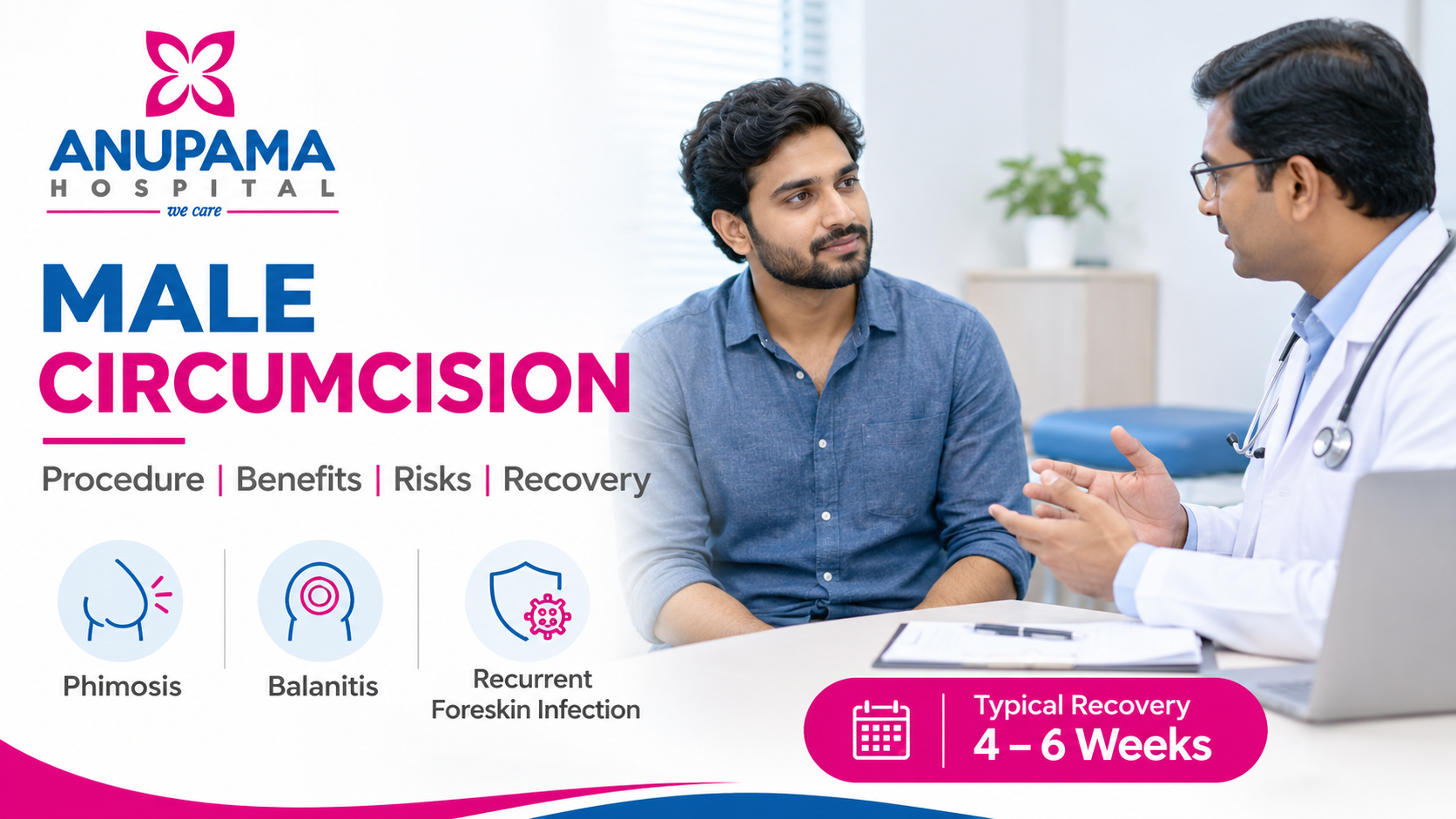
Male circumcisions involve the removal of an individual’s foreskin which covers the head of the penis. Surgery is often advised to address issues such as phimosis, and frequent or inflammatory conditions. Men may also elect to have a male circumcision for personal, cultural or religious reasons. Being well informed about male circumcisions will allow men to make well-considered decisions.
Whilst many associate circumcisions with infants, male circumcisions can also be safely carried out in adulthood. Details relating to the procedure, the techniques available and aftercare are set below.
What is Male Circumcision?
Male circumcision is where a doctor surgically removes an individual’s foreskin. The head of the penis is then left open and uncovered.
Male circumcisions are typically undertaken by a qualified surgeon or urologist. The most suitable technique will depend on the individual and their condition.
As a day-care procedure, suitable males can often go home on the same day. Pain is avoided through the administration of anaesthetic.
Why Would An Adult Require Male Circumcision?
Whilst not all men require male circumcision, those suffering from issues relating to their foreskin may experience pain, poor hygiene or frequent infection. If a man does not find relief from his symptoms through other methods of treatment, a doctor may advise him to have male circumcision.
Common medical reasons for a male to have a circumcision include:
1. Phimosis (tight foreskin)
An individual has phimosis if they are unable to easily pull back their foreskin. Adult men can suffer from pain when erect and/or during sexual intercourse. Poor hygiene can also be an issue.
Where phimosis is severe or ongoing, a doctor may advise a male to have a circumcision.
2. Balanitis
Balanitis is where the head of the penis becomes inflamed. Symptoms may include redness, itchiness, oedema and pain. There can also be a discharge.
Frequent balanitis can arise due to infection, dermatological issues and/or poor hygiene. Initial investigation by a doctor will seek to ascertain the root of the problem before deciding if a male should have a circumcision.
3. Frequent Foreskin Infection
Some men continue to suffer from foreskin infection even after suitable treatment. This can result in itchiness, offensive smells and/or pain. Circumcision may be advised to avoid issues relating to a problematic foreskin.
4. Dermatological Issues
Skin disorders can lead to thickening and scarring of a man’s foreskin. Further, affected foreskins can become harder to pull back. Surgery may be advised to alleviate issues in these instances where other solutions are not suitable.
Prior to advising a male to have a circumcision, a urologist will investigate his condition. Not all cases of tight foreskins will require a male to have a circumcision.
What Occurs During Male Circumcision?
Being aware of the procedure can help to ease a male’s worries, particularly if he is having his first male circumcision.
Typically, male circumcisions will follow this process:
Step 1 – Investigation
A doctor will investigate your symptoms, together with your medical background and any allergies. Physical investigation then takes place to establish if a male circumcision is suitable.
Step 2 – Anaesthetic
Local, regional or general anaesthetic may be administered, depending on a male’s medical situation. Again, this is to ensure that a person does not feel pain.
Step 3 – Foreskin Removal
Using a chosen technique, a surgeon will precisely excise the relevant section of foreskin. Hemorrhage is then managed and the wound edges are joined using suitable methods.
Step 4 – Wound Dressing and Recovery
The area is then cleansed and dressed. Recovery is monitored before a male is allowed to leave provided there are no concerns for further investigation.
Whilst the actual procedure often lasts for approximately 20-40 minutes, the overall hospital appointment duration is extended to allow for preparation for and recovery from surgery.
What Techniques Are Used For Male Circumcision?
The most appropriate technique for a particular male will depend on his physical characteristics, medical status and the requirements of the surgery. It will also rely on the judgement of the surgeon.
Standard Surgical Circumcision
During this procedure a doctor will use surgical tools to excise a man’s foreskin. Sutures, which are absorbable, are usually then used to close the wound.
This technique can be applied in a wide variety of situations and may be well suited to males with extensive scarring or specific dermatological issues relating to their foreskin.
Stapler Circumcision
A stapler is a dedicated, disposable instrument which can both excise foreskin and join wound edges in one process.
Compared to other techniques, stapler circumcision can shorten a male’s operation duration. It may also assist in limiting haemorrhage in suitable cases. Nevertheless, not all males will be suitable for stapler circumcision.
Laser Circumcision
Laser technology can be utilised to cut tissue. Depending on the type of laser and the approach adopted, this can allow accurate excision and may also aid haemorrhage control.
Individuals should consider the pros and cons of each technique and seek professional advice to establish which is most suitable for them, not simply rely on information relating to faster recovery times.
What Are The Benefits And Risks Of Male Circumcision?
Male circumcision can be highly beneficial for males suffering from particular foreskin related medical issues.
Benefits may include:
- Alleviation of issues arising from a tight foreskin.
- Decrease in the frequency of dermatological inflammation relating to a male’s foreskin in suitable individuals.
- Facilitation of good genital hygiene.
- Avoidance of issues relating to a man’s foreskin.
- Enhanced ease and comfort in relation to erection and/or foreskin movement where these are problematic.
Despite these potential benefits, as with all surgery, male circumcision does also present with risks.
Risks can include:
- Pain, oedema and/or bruising.
- Haemorrhage and/or wound infection.
- Poor wound healing.
- Scarring and/or concerns about appearance.
- Altered penis sensation.
- Occasionally, further medical intervention may be necessary.
It is also important to recognise that circumcision does not fully protect a male against sexually transmitted infections and good sexual health practice should still be adhered to.
How Long Does Male Circumcision Recovery Take?
Typically, adult male circumcisions require around four to six weeks to fully recover. Nevertheless, there is individual variation in recovery times. Some males can resume light everyday activities sooner, but full wound recovery will take longer.
Generally, recovery will involve:
Initial Days – Minor oedema, pain and/or bruising may occur.
First Two Weeks – Typically, a male will begin to recover. However, the head of the penis may continue to be sensitive.
Weeks Three And Four – Further recovery occurs and a male can progressively resume activities as advised by a doctor.
Weeks Four To Six – Many males will have largely recovered. Nonetheless, it is important that a doctor confirms when an individual’s wound has fully healed.
Important Aftercare Information For Males
It is crucial that males adhere to aftercare advice so that their wounds heal effectively.
- Ensure that the area is kept clean and that aftercare is undertaken in the recommended manner.
- Wear loose underwear and clothing.
- Administer medication as instructed.
- Avoid heavy manual labour, cycling and vigorous exercise until permitted to do so.
- Abstain from sexual activity and masturbation for a minimum of four weeks (or longer if full wound recovery has not been achieved).
- Attend allocated follow-up appointments.
Seek immediate medical advice if there is excessive bleeding, a high temperature, increasing pain, presence of pus and/or an offensive smelling discharge. Moreover, if a male is unable to pass, or is struggling to pass, urine, he should urgently seek medical investigation.
When Should You See A Doctor About Male Circumcision?
Men should consult a doctor if they suffer from ongoing tight foreskin, painful erections, frequent dermatological inflammation, problems in pulling back their foreskin or recurrent infection.
Never try and manually pull back a tight foreskin as this can lead to harm. Should a male’s foreskin become stuck behind his penis head and be unable to be moved back into its usual position, he should immediately seek medical advice.
Those wishing to have a male circumcision can talk to doctors at Anupama Hospital regarding their symptoms, treatment options and recovery. Information is also available on male circumcision surgery at the hospital to further inform people about this surgery and how it is undertaken in Hyderabad.
Moreover, by investigating how phimosis is treated, males can appreciate the importance of correct investigation for tight foreskin issues. Those wishing to obtain further information relating to urinary and reproductive health can also investigate the urology services provided by Anupama Hospital.
Make Well-Informed Decisions About Your Urological Health
Male circumcision can be a suitable treatment for particular adult males who suffer from ongoing foreskin related issues. Yet, decisions in relation to circumcision should always be based on correct investigation, awareness of alternative treatment options and consideration of potential risks.
Should you suffer from tight foreskin, frequent infection and/or dermatological inflammation, consult the experts at Anupama Hospital. Early investigation can enable identification of the cause of your issues and allow assessment of whether you should have a male circumcision or an alternative form of treatment.