
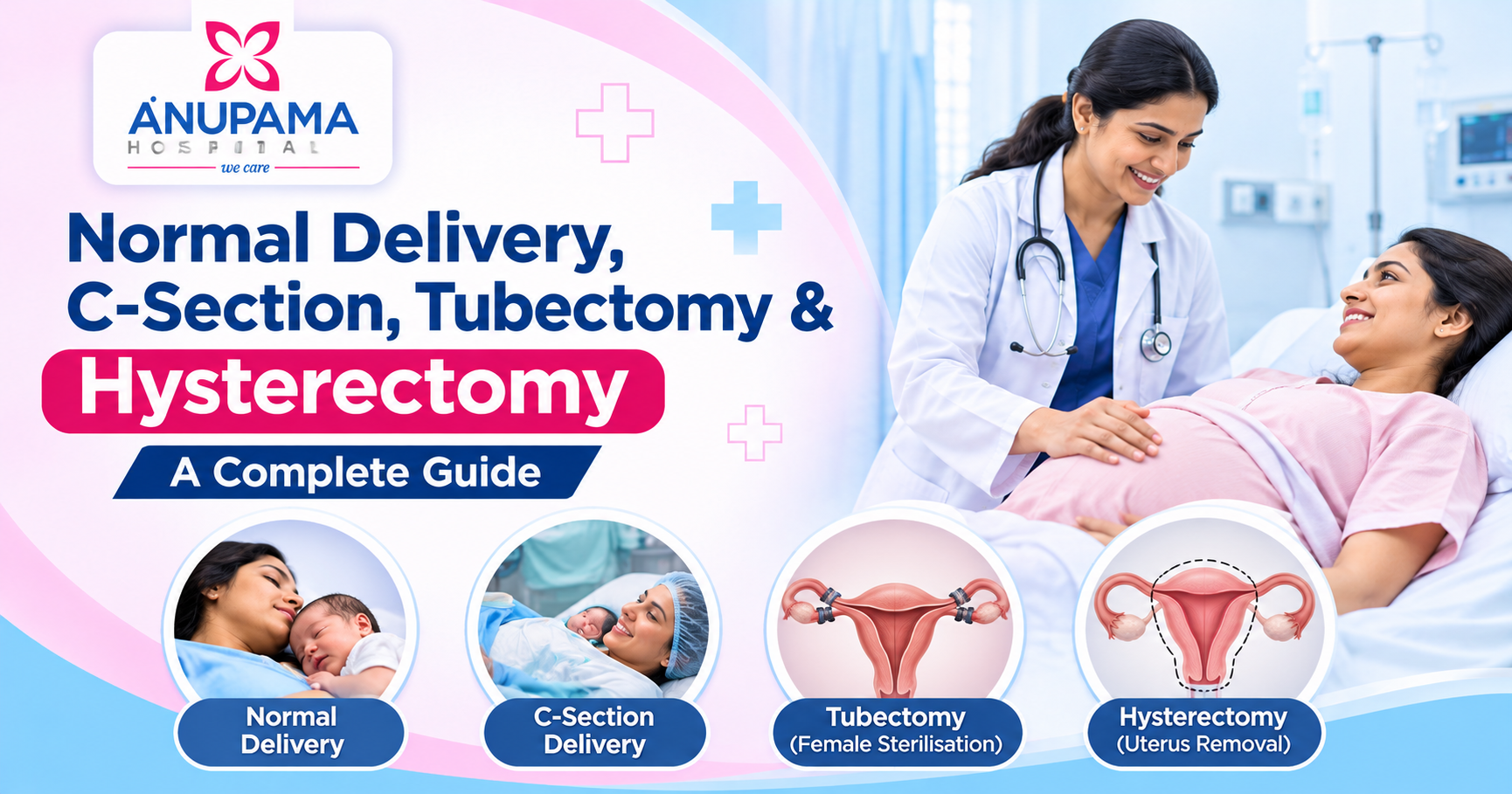
Women may need different types of maternity and gynaecological care at different stages of life. From welcoming a baby to making informed family-planning decisions and treating uterine conditions, understanding available medical procedures can help women discuss their options confidently with a qualified doctor.
At Anupama Hospitals in Kukatpally, Hyderabad, women can explore maternity and gynaecological care, including normal delivery, C-section delivery and hysterectomy services. The appropriate treatment depends on each patient’s health, medical history, pregnancy, and individual needs.
This guide explains normal delivery, C-section, tubectomy and hysterectomy, including when they may be recommended, important considerations, and recovery.
What Are Normal Delivery, C-Section, Tubectomy and Hysterectomy?
Normal delivery is childbirth through the vagina. A C-section is a surgical procedure used to deliver a baby through incisions in the abdomen and uterus. Tubectomy is a permanent method of female contraception that involves blocking or cutting the fallopian tubes. Hysterectomy is surgery to remove the uterus, usually to treat specific gynaecological conditions.
These procedures have different purposes. Normal delivery and C-section relate to childbirth, tubectomy relates to permanent contraception, and hysterectomy treats selected uterine or gynaecological conditions.
Normal Delivery: Understanding Vaginal Childbirth
Normal delivery, also called vaginal delivery, occurs when a baby is born through the birth canal. The process generally involves labour, cervical dilation, the birth of the baby, and delivery of the placenta.
What Are the Benefits of Normal Delivery?
When medically appropriate, vaginal birth may offer several advantages:
- Avoids major abdominal surgery.
- Often involves a shorter hospital stay than a C-section.
- May allow a quicker initial physical recovery.
- Avoids risks associated specifically with abdominal surgery.
However, every labour is different. Vaginal delivery can also involve complications, and some women may require assisted delivery or an emergency C-section.
Who May Be Suitable for Normal Delivery?
A doctor evaluates the mother’s health, the baby’s position and condition, the progress of labour, and any pregnancy-related risks before recommending a delivery approach. The final decision should prioritise the safety of both mother and baby.
Women looking for a normal delivery hospital in Kukatpally should ask about antenatal consultations, labour monitoring, emergency support, newborn care and post-delivery follow-up.
C-Section Delivery: When Is It Needed?
A caesarean section, commonly called a C-section, is a surgical method of delivering a baby through incisions in the mother’s abdomen and uterus.
A C-section may be planned before labour or performed during labour if a medical concern arises. It may be recommended when vaginal delivery presents a greater risk to the mother or baby.
Common Reasons for a C-Section
Depending on the clinical situation, reasons may include:
- The baby is in a position that makes vaginal delivery unsafe.
- The placenta blocks the cervix.
- Labour is not progressing adequately.
- The baby shows signs of distress.
- Certain maternal health conditions make a C-section safer.
- Specific complications arise during pregnancy or labour.
A previous C-section does not automatically mean that every future delivery must also be a C-section. A qualified obstetrician can assess the individual’s history and explain whether a trial of labour or a planned repeat C-section is appropriate.
What Is Recovery Like After a C-Section?
Recovery involves healing from surgery as well as adjusting to life with a newborn. Patients may need pain management, wound care, follow-up appointments and temporary restrictions on strenuous activities.
The recovery period varies by individual. Follow the treating team’s instructions and seek medical advice for fever, worsening pain, wound redness or discharge, heavy bleeding, breathing difficulty or other concerning symptoms.
If you are researching a C-section delivery hospital in Kukatpally, ask your care team about surgical indications, anaesthesia, post-operative monitoring, newborn support and recovery planning.
Tubectomy: A Permanent Family-Planning Option
Tubectomy, also called female sterilisation, is a surgical procedure intended to permanently prevent pregnancy. It works by blocking, sealing or cutting the fallopian tubes, preventing the egg and sperm from meeting.
When Is Tubectomy Considered?
Tubectomy may be considered by women who are certain they do not want future pregnancies. A qualified doctor should explain how the procedure works, its potential risks, alternative contraceptive methods and the possibility that reversal may not be successful.
Is Tubectomy Reversible?
Tubectomy should be considered permanent. Although reversal surgery may be possible in selected cases, it is not guaranteed to restore fertility. In vitro fertilisation (IVF) may be another option for some people who later wish to become pregnant.
Tubectomy is not the same as hysterectomy. Tubectomy targets the fallopian tubes and leaves the uterus in place, while hysterectomy involves removing the uterus.
Women considering tubectomy surgery in Kukatpally should discuss their reproductive goals, medical history, timing and available alternatives with a gynaecologist before making a decision.
Hysterectomy: When Is Uterus Removal Recommended?
Hysterectomy is an operation to remove the uterus. After a hysterectomy, a woman cannot carry a pregnancy. Menstruation stops because the uterus has been removed.
Doctors may recommend hysterectomy for certain conditions when appropriate alternatives have not worked, are unsuitable, or are not the best option for the patient’s circumstances.
Common Reasons for Hysterectomy
Possible reasons include:
- Uterine fibroids that cause significant symptoms.
- Heavy or persistent uterine bleeding.
- Uterine prolapse.
- Certain cases of adenomyosis or endometriosis.
- Precancerous conditions or cancers affecting reproductive organs, depending on the diagnosis.
The recommended approach may be abdominal, vaginal or laparoscopic, depending on the condition, anatomy, medical history and surgeon’s assessment. Not every patient is suitable for every method.
What Should You Know Before Hysterectomy?
Before surgery, ask your doctor about the diagnosis, non-surgical options, the type of procedure proposed, expected recovery, and whether the ovaries or fallopian tubes will also be removed.
Removing the uterus does not automatically mean that both ovaries will be removed. If the ovaries are removed, hormonal changes and menopause-related effects may need to be discussed.
Recovery depends on the surgical approach and individual circumstances. Follow your surgeon’s advice on wound care, physical activity, lifting restrictions, sexual activity and follow-up appointments.
If you are considering hysterectomy treatment in Kukatpally, a detailed consultation can help you understand the potential benefits, risks and alternatives.
How Are These Four Procedures Different?
|
Procedure |
Main purpose |
Important consideration |
|
Normal delivery |
Childbirth through the vagina |
Depends on the mother’s and baby’s condition |
|
C-section |
Surgical childbirth |
Requires surgery and post-operative recovery |
|
Tubectomy |
Permanent contraception |
Should be considered irreversible |
|
Hysterectomy |
Treating selected uterine conditions |
Ends the ability to carry a pregnancy |
These procedures are not interchangeable. The right option depends on the medical reason for treatment and the patient’s informed preferences.
How to Choose a Maternity and Gynaecology Hospital in Kukatpally
When choosing a hospital for pregnancy care or a gynaecological procedure, consider:
- Qualified specialists: Confirm that obstetricians and gynaecologists are appropriately qualified for your care.
- Emergency readiness: Ask about the hospital’s process for managing unexpected complications.
- Clear communication: Choose a team that explains the diagnosis, treatment choices, risks and expected recovery.
- Maternity and newborn support: Ask what monitoring and newborn care are available during and after delivery.
- Surgical and recovery support: Understand the pre-operative assessment, pain management, discharge guidance and follow-up plan.
- Transparent costs: Request an estimate of consultation, tests, procedure, room and follow-up charges where applicable.
Anupama Hospitals in Kukatpally lists obstetrics and gynaecology services, including normal , C-section delivery and hysterectomy. Contact the hospital to confirm the availability of a specific procedure, the appropriate specialist and current appointment arrangements.
Frequently Asked Questions
Which is better: normal delivery or C-section?
Neither method is best for every pregnancy. Normal delivery may be suitable when vaginal birth is considered safe. A C-section may be necessary or safer in certain situations. The obstetrician should recommend an approach based on the mother’s and baby’s health.
When is a C-section necessary?
A C-section may be recommended for concerns such as an unsafe fetal position, placenta previa, certain maternal conditions, fetal distress or labour that does not progress. The decision depends on the clinical circumstances.
Is tubectomy a permanent procedure?
Yes. Tubectomy is intended to be permanent contraception. Reversal is not guaranteed, so women should discuss the procedure and alternative contraceptive options with a qualified healthcare professional.
Does hysterectomy stop menstruation?
Yes. Menstruation stops after the uterus is removed. Whether menopause occurs immediately also depends on whether the ovaries are removed and the patient’s age and hormonal status.
How long does recovery take after these procedures?
Recovery varies by procedure and patient. Vaginal delivery, C-section, tubectomy and hysterectomy each have different recovery needs. Your treating doctor can give guidance based on the exact procedure and your health.
Conclusion
Understanding normal delivery, C-section, tubectomy and hysterectomy helps women prepare for consultations and make informed decisions about their health. Each procedure has a different purpose, and the safest option depends on a professional medical assessment.
For maternity or gynaecological concerns, consult a qualified specialist at Anupama Hospitals, Kukatpally, Hyderabad, to discuss your symptoms, available options, benefits, risks and next steps.